
tetris00 님의 블로그
The books list that mentioned WIZnet W5500 chip in the text 본문
Below are the books that mention the WIZnet W5500 in the text.
You can find these books by searching for "w5500" at Books.google.com.
[1] Computational Science and Computational Intelligence: 11th ...

[2] Advances in Automation II: Proceedings of the International ...

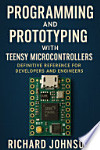
[3] Programming and Prototyping with Teensy Microcontrollers: ...

The WIZnet W5500 is a widely used chip for easily and efficiently adding wired network functionality to various microcontroller environments. Its key features include:
1. Improved hardware performance and efficiency
Socket expansion: Compared to the previous W5100 model, which supported four hardware sockets, the W5500 supports up to eight sockets, doubling its connection capacity.
Reduced computational load: The built-in hardware TCP/IP stack offload engine reduces the processing load on microcontrollers like the Teensy and improves data transmission efficiency (throughput).
2. Ease of development and integration
Simplified implementation: Developers only need to provide standardized data to be transmitted, eliminating the complexities of network protocols, making wired network functionality easy to add.
Various platform support: It is considered a key option alongside the ENC28J60 in Teensy projects, or can be used as an Ethernet shield in Arduino and Bold IoT environments, easily configured with a MAC address and IP address. 3. Summary of Key Contents by Book
[1] Computational Science... (2025): Highlights improved performance and eight additional hardware sockets compared to the W5100.
[2] Advances in Automation II (2021): Describes Microchip's network controller, which is so easy to use that developers only need to format the data.
[3] Programming and Prototyping with Teensy... (2025): Covers hardware-layer interfacing with the Teensy microcontroller and efficiency through TCP/IP stack offloading.
[4] INTERNET OF THINGS WITH ARDUINO... (2018): Demonstrates how to enable networking with real-world code using a W5500-based shield in an Arduino environment.


